

Overview:
Lipedema is often mistaken for obesity due to the abnormal accumulation of fat in the lower body.
However, while both conditions involve excess fat, they are fundamentally different in terms of cause, fat distribution, and how they respond to treatment.
Understanding these key differences is essential for proper diagnosis and management.
Fat Distribution of Lipedema
A key distinguishing factor between Lipedema and obesity is how fat is distributed in the body.
In Lipedema, fat accumulates disproportionately in the lower body, particularly in the hips, thighs, buttocks, and legs, while the feet are typically spared. This creates a characteristic “cuff” or “bracelet” effect at the ankles, where the fat abruptly stops, which is not seen in obesity.1
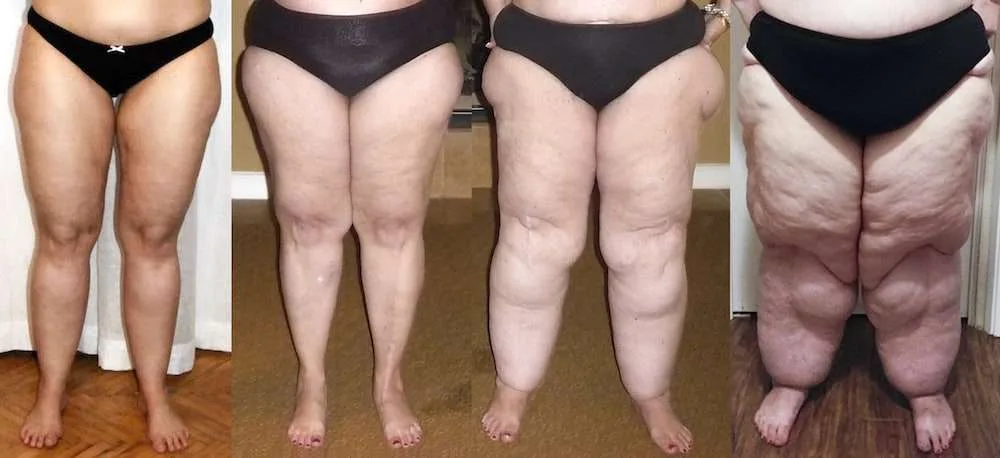
In some cases, Lipedema can also affect the arms, leading to a disproportionate appearance between the limbs and the rest of the body.2
Symmetry is another hallmark of Lipedema—both sides of the body are equally affected, unlike lymphedema, where swelling and eventually fat distribution can vary.3
In contrast, obesity leads to a more even distribution of fat across the entire body, including the abdomen, arms, legs, face, and sometimes the feet. This generalized fat accumulation in obesity often results in a “round” or “apple” body shape, with noticeable fat in the abdominal area.4
Unlike Lipedema, obesity does not create the same distinct contrast between affected and unaffected areas. Both conditions can be present at the same time, often making Lipedema more challenging to identify.
Lipedema’s Response to Diet and Exercise
Perhaps the most frustrating aspect of Lipedema for patients is that it does not respond or minimally responds to traditional weight loss methods. In one survey of 707 women with Lipedema, 52.2% of patients reported no symptom improvement with diet or exercise.5
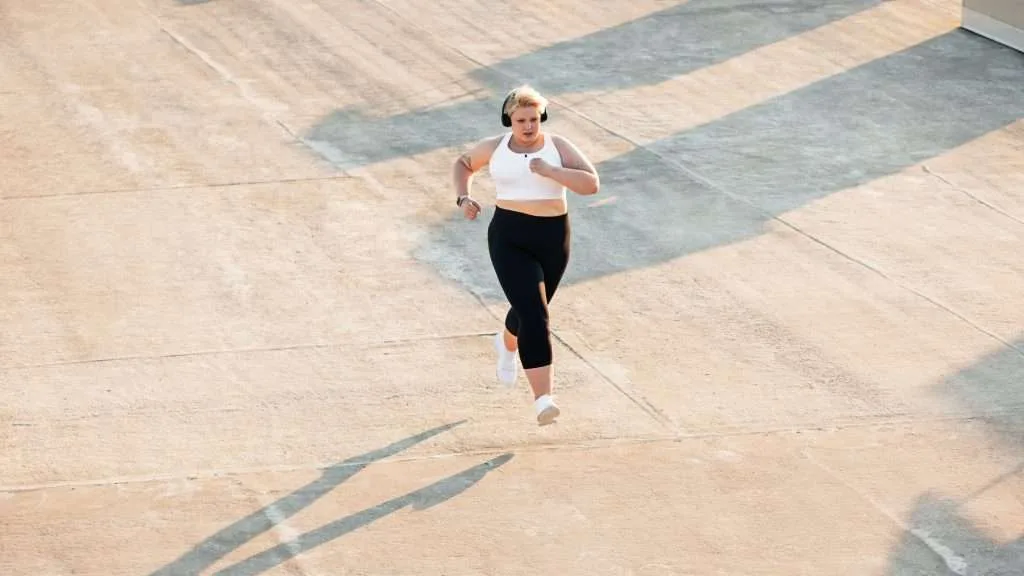
This contrasts with obesity-related fat that can be reduced through caloric restriction and exercise. Lipedema fat is resistant to these efforts. Even in cases where patients lose weight, the fat in the Lipedema-affected areas remains, often resulting in more noticeable fat disproportion, often causing significant emotional and physical distress.
Dr. Karen Herbst, a leading Lipedema researcher, emphasizes that this resistance to weight loss is a key differentiator between Lipedema and obesity.
Pain and Sensitivity
Another major distinction between Lipedema and obesity is the presence of pain.
Women with Lipedema often report pain, tenderness, and sensitivity in the affected areas, particularly when pressure is applied or after standing for long periods.
This is not typical in obesity, where the fat tissue is generally painless.
In addition, Lipedema patients bruise more easily due to increased fragility of blood capillaries in the affected regions, which is rarely seen in simple obesity.
Swelling and Edema
Swelling is common in advanced stages of Lipedema, especially when the condition progresses to Lipo-Lymphedema, where the lymphatic system becomes compromised.
In contrast, obesity generally does not cause the same type of persistent swelling or fluid retention.
While obese individuals may experience swelling due to other factors, such as poor circulation or venous insufficiency, it is not a direct consequence of fat accumulation as it is in Lipedema. However, severe obesity can lead to lymphedema.
Psychological Impact
Both Lipedema and obesity can have a profound impact on mental health, but for different reasons.
Women with Lipedema often feel misunderstood, as their condition is frequently misdiagnosed as obesity. Despite their efforts to lose weight, they see no improvement in the appearance of their legs, leading to frustration, anxiety, and depression.

Obesity can similarly affect mental health, particularly when it leads to societal stigma, but individuals with obesity typically understand that weight loss is possible with lifestyle changes, which is not the case for those with Lipedema. In other words, when lifestyle changes happen, weight loss happens.
Both deal with fat bias, but those with Lipedema have to also deal with the lack of knowledge, understanding and belief.
Treatment Differences
The treatment approaches for Lipedema and obesity also vary significantly.
For obesity, the mainstays of treatment are diet, exercise, weight loss medications and sometimes bariatric surgery. These methods can lead to significant fat loss across the body.
However, for Lipedema, conservative treatments like compression therapy, manual lymphatic drainage, and low-impact exercise are recommended to manage symptoms and prevent progression. Natural health supplements to reduce inflammation and medications are often necessary. In some cases, specialized liposuction is the only effective treatment for de-bulking Lipedema fat.
Dangers of Confusing Lipedema with Obesity
While Lipedema and obesity may appear similar at first glance, they are distinct conditions that require different approaches to diagnosis and treatment.
Recognizing these differences is crucial to ensuring that women with Lipedema receive the care they need, rather than being misdiagnosed and mistreated as obese.
Proper diagnosis of Lipedema can improve outcomes by enabling patients to pursue appropriate treatments and avoid unnecessary frustration and health risks.
Sources:
- Forner-Cordero, I., Perez-Pomares, M. V., Forner, A., Ponce-Garrido, A. B., & Munoz-Langa, J. (2021). Prevalence of clinical manifestations and orthopedic alterations in patients with lipedema: A prospective cohort study. Lymphology, 54(4), 170–181. ↩︎
- Aday, A. W., Donahue, P. M., Garza, M., Crain, V. N., Patel, N. J., Beasley, J. A., Herbst, K. L., Beckman, J. A., Taylor, S. L., Pridmore, M., Chen, S. C., Donahue, M. J., & Crescenzi, R. (2024). National survey of patient symptoms and therapies among 707 women with a lipedema phenotype in the United States. Vascular medicine (London, England), 29(1), 36–41. https://doi.org/10.1177/1358863X231202769 ↩︎
- Aday, A. W., Donahue, P. M., Garza, M., Crain, V. N., Patel, N. J., Beasley, J. A., Herbst, K. L., Beckman, J. A., Taylor, S. L., Pridmore, M., Chen, S. C., Donahue, M. J., & Crescenzi, R. (2024). National survey of patient symptoms and therapies among 707 women with a lipedema phenotype in the United States. Vascular medicine (London, England), 29(1), 36–41. https://doi.org/10.1177/1358863X231202769 ↩︎
- Xu, S., & Xue, Y. (2016). Pediatric obesity: Causes, symptoms, prevention and treatment. Experimental and therapeutic medicine, 11(1), 15–20. https://doi.org/10.3892/etm.2015.2853 ↩︎
- Aday, A. W., Donahue, P. M., Garza, M., Crain, V. N., Patel, N. J., Beasley, J. A., Herbst, K. L., Beckman, J. A., Taylor, S. L., Pridmore, M., Chen, S. C., Donahue, M. J., & Crescenzi, R. (2024). National survey of patient symptoms and therapies among 707 women with a lipedema phenotype in the United States. Vascular medicine (London, England), 29(1), 36–41. https://doi.org/10.1177/1358863X231202769 ↩︎