
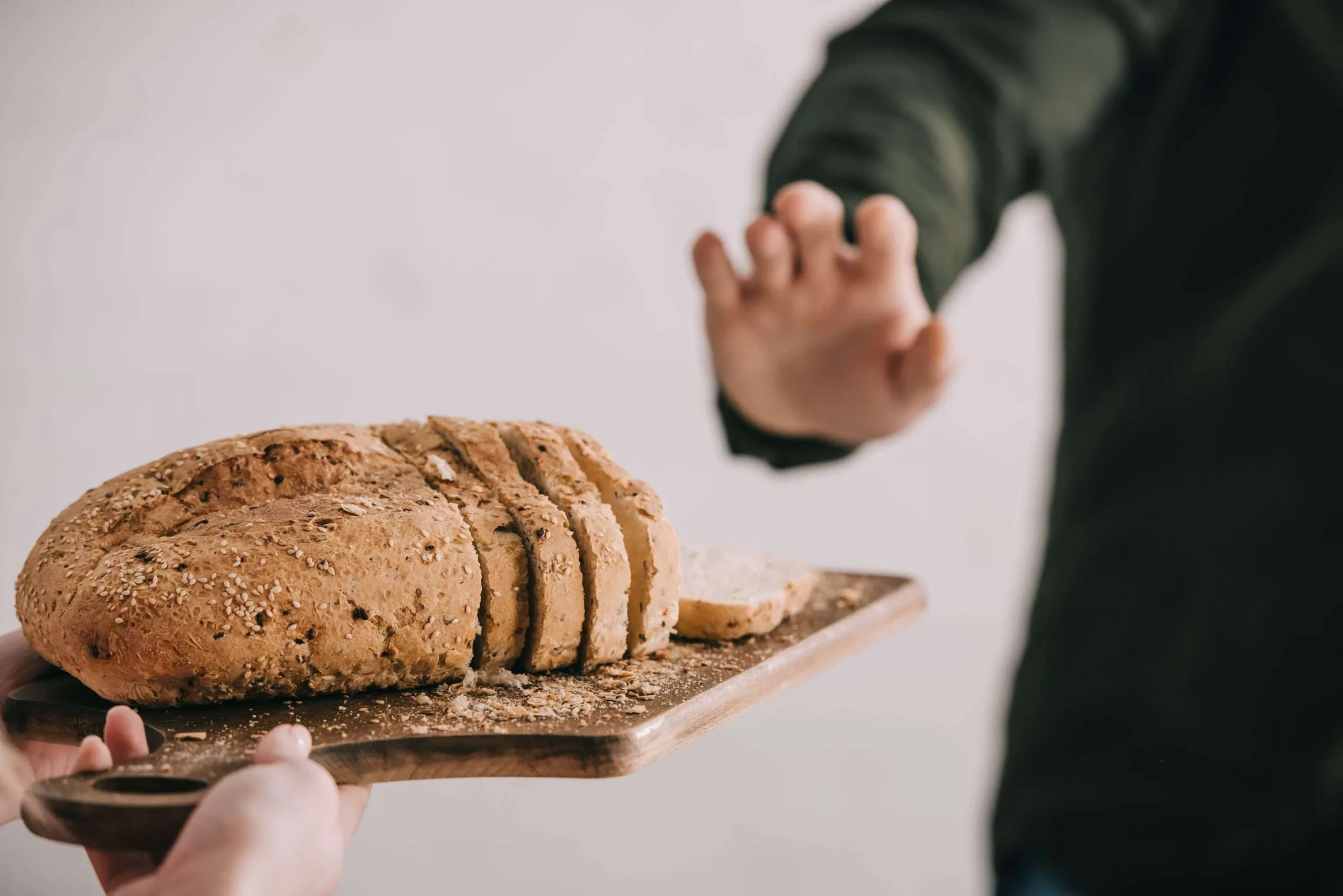
"I went gluten-free and my legs felt so much better… then I shared pizza with my kids and my legs ached for three days." — Dr. Jonie Girouard
If you've ever felt like your favorite foods were betraying you, you're not alone. Let's talk about why gluten might be your lipedema's secret enemy—and what you can do about it.
So, What's the Big Deal with Gluten?
Think of gluten as the stretchy "glue" that holds wheat, barley, and rye together. But here's where it gets sneaky: because food-processing lines mingle ingredients, gluten hides in the most unexpected places—"like keto-granola, salad dressings, candy and even chewing gum."
When women with lipedema accidentally eat these hidden sources, many describe waking up the next day with swollen, heavy legs that feel like they've been bruised all over. Sound familiar? That's your body trying to tell you something important.
The Fire Within: How Gluten Fans the Flames
Here's something that might blow your mind: A 2024 review labeled gluten a "universal pro-inflammatory protein"—meaning it can travel throughout your body like a troublemaker, irritating tissues wherever it goes.
Dr. Jonie explains it brilliantly with this visual: imagine ordinary body fat as a squishy water balloon that changes size easily. Now picture lipedema fat as a hard softball that "is hard, firm and resistant to change." When you add chronic gut-driven inflammation to the mix? Your immune system topples "like a set of dominoes," triggering pain, fluid retention, and that dreaded brain fog that makes you feel like you're wading through molasses.

The Genetic Plot Twist
Here's where things get really interesting. Nearly half of women with lipedema carry the HLA-DQ2 gene, and one in five carry HLA-DQ8. If those sound like random letters and numbers, here's what matters: these are the classic celiac risk genes, and women with lipedema have them way more often than the general population.
If you carry either gene, you face a 36-53% lifetime chance of developing full-blown celiac disease. Now, before you panic—genetics aren't destiny. But they do explain why even "non-celiac" gluten sensitivity can hit our community like a ton of bricks.
When Your Body Plays Tricks: The Symptom Overlap
Ever notice how a gluten reaction can feel exactly like a lipedema flare? We're talking bloating, brain fog, crushing fatigue, stiff joints, and that sudden "I gained 5 pounds overnight" feeling.
Dr. Jonie sees this all the time in her practice. Gluten and dairy are "the most common foods that hurt," and she encourages her patients to become detectives in their own lives. Journal every spike in pain or when those nodules feel extra tender after meals. You might be surprised to find that yesterday's pasta dinner or this morning's pastry is today's pain.
To Test or Not to Test? Your Game Plan
Wondering if you should get tested or just dive into gluten-free life? Here's your roadmap:
- First things first: If you're dealing with severe gut symptoms, unexplained anemia, or thyroid issues that came out of nowhere, talk to your GP about celiac antibody tests or HLA typing BEFORE ditching gluten (the tests won't work once gluten's out of your system).
- The 4-6 week experiment: Ready to see how you feel without gluten? Commit to strict gluten-free eating while keeping daily notes on pain levels, swelling, mental clarity, and how tight your rings feel. After week 4, have one gluten-containing meal and watch what happens over the next 72 hours. Dr. Jonie's golden rule: "Listen to your body… write it down, figure it out."
- Don't fall for the junk trap: Those "gluten-free" cookies might be wheat-free, but they're often sugar bombs in disguise. Choose whole-food swaps instead—think leafy greens, chia seeds, flax, nuts, and quality protein over ultra-processed breads.
Building Your Power Plate
Ready to create meals that love you back? Here's your blueprint:
- Load up on non-starchy veggies and fresh herbs—they're antioxidant powerhouses with no limits
- Prioritize protein (think seafood, poultry, eggs, legumes, even some red meat) to support your connective tissue
- Embrace healthy fats—olive oil, avocado, mixed nuts—for happy hormones
- Choose smart carbs—berries, kiwi, small carrot portions—and time them around when you're active and with another food
- Treat yourself mindfully: Those dark chocolate-dipped almonds will satisfy you way more than any wheat-based pastry ever could

Oops, I Ate Gluten! Your Recovery Plan
We're all human, and accidents happen. When gluten sneaks past your defenses, hydration and gentle movement is your best friend. Try some easy rebounding, hop on a vibration plate, or take a relaxing walk in the pool—these activities help pump your lymph system and calm that angry "softball" tissue within hours. Slip on your micromassage compression tights and treat yourself to a manual lymph drainage session for extra relief.
Your Power Takeaways
- This isn't your fault. Lipedema is a connective tissue disorder, not a character flaw or willpower problem. But gluten might be throwing gasoline on your inflammatory fire.
- Your experience is valid. If your body screams in protest after eating wheat, that's real data that deserves respect—not dismissal.
- A gluten-free trial is low risk with potentially life-changing rewards. Combined with mindful journaling, you'll quickly discover whether gluten is a friend, foe, or something in between for your unique body.
Here's the truth: relief doesn't always come from eating less. Sometimes it comes from eating different. Your journey is uniquely yours, but you never have to walk it alone. The Lipedema Clinic community is here, cheering you on with every step, every discovery, and every victory—no matter how small.
Ready to listen to what your body's been trying to tell you? Your legs might just thank you for it.