
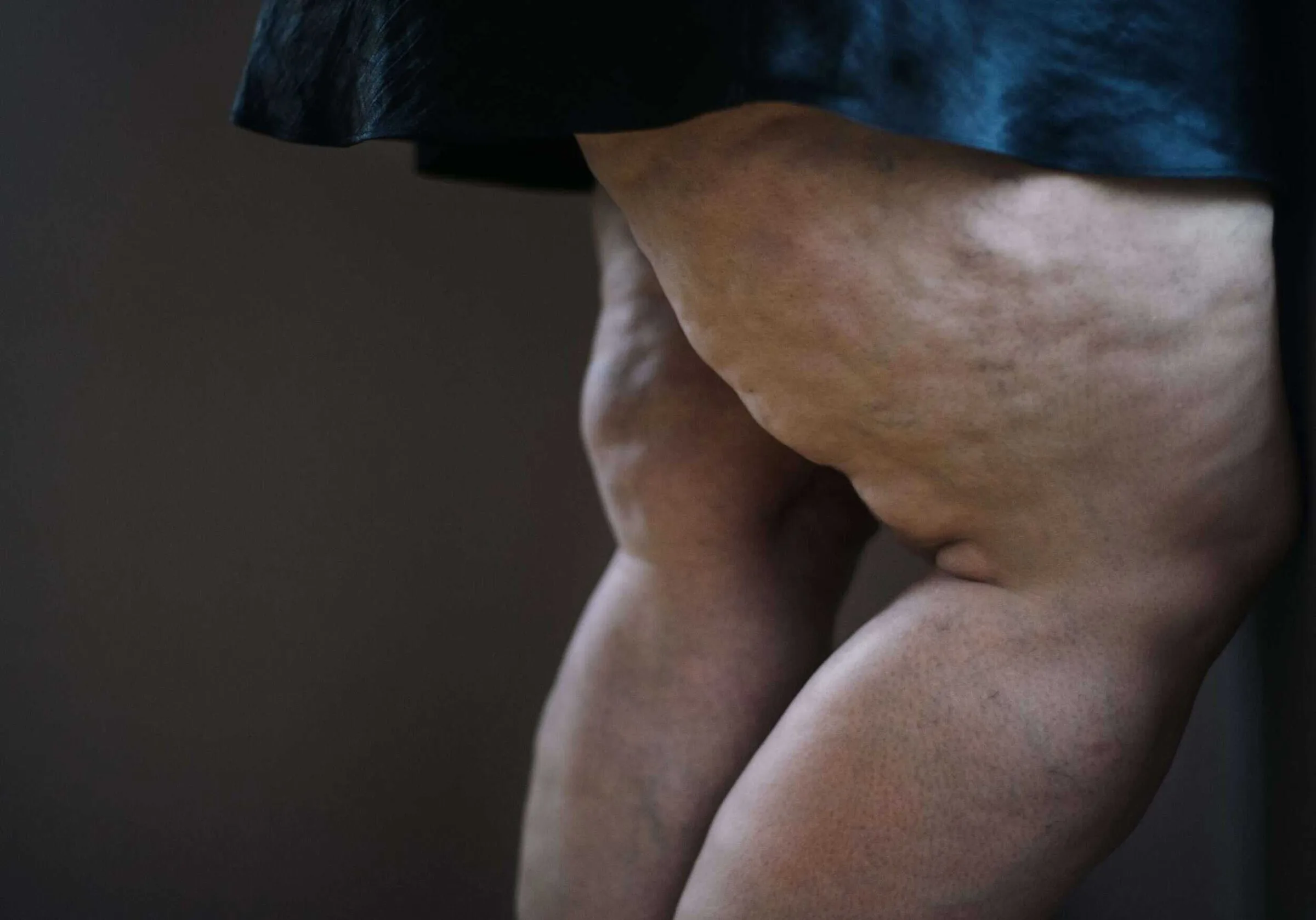
Overview:
Lipedema is a chronic, often misdiagnosed condition that impacts nearly 1 in 9 women worldwide.
Frequently mistaken for obesity, Lipedema is a distinct fat disorder resistant to traditional weight loss methods, including most diets and exercise. For those affected, the inability to lose fat from specific areas—most commonly the legs, hips, and sometimes the arms—can lead to frustration and feelings of helplessness.
Dr. Jonie Girouard, a board-certified medical doctor with over 16 years of experience treating Lipedema, stresses that early detection and proper management are vital to halting its progression.
When left untreated, Lipedema can worsen over time, leading to increased swelling and enlargement of the legs, mobility challenges, severe pain, and advanced complications like Lipo-Lymphedema, where obstructed lymphatic channels cause additional swelling (lymphedema).
In this article we will delve further into what Lipedema is, its symptoms and stages, how it progresses, and the importance of early intervention to manage the condition effectively.
What is Lipedema?
First described in 1940 by Dr. Edgar Allen and Dr. Edgar Hines1 Lipedema is a chronic disorder almost always affects women, causing an abnormal accumulation of fat, typically in the lower body, including the hips, thighs, and legs. It is often mistaken for obesity, but unlike obesity, Lipedema is resistant to diet and exercise, making it a distinct medical condition requiring specialized treatment.
Characterized by a disproportionate distribution of fat, Lipedema also involves pain and sensitivity in the affected areas. Women with Lipedema may notice their lower body becoming disproportionately larger over time, despite maintaining or even losing weight in other areas of the body. This condition can be incredibly frustrating, as traditional weight-loss methods do not reduce the lipomatous fat.
Lipedema is often associated with:
- 🔘 Tenderness and Pain: Many patients experience pain or tenderness in the areas affected by Lipedema, particularly when pressure is applied.
- 🔘 Easy Bruising: Even minor bumps or touches can cause bruising.
- 🔘 Swelling and Heaviness: The affected limbs may feel heavy and swell, particularly after standing for long periods of time or in warm weather.
- 🔘 Symmetry: Lipedema typically affects both sides of the body symmetrically, which helps distinguish it from other related conditions.
According to research by Dr. Karen Herbst, a leading expert in Lipedema, the condition is believed to result from a malfunction of adipocytes (fat cells) and involves inflammation and abnormalities in the lymphatic system2. Additionally, many women with Lipedema report worsening of symptoms during hormonal changes such as puberty, pregnancy, hysterectomy or menopause, suggesting a strong hormonal link.
Genetic factors play a significant role, with most women reporting family members who suffer from similar symptoms. Dr. Sandro Michelini and his team have also contributed to the understanding of Lipedema, highlighting the role of genetic predispositions in its development3. His research suggests that Lipedema is inherited in an autosomal dominant pattern, making family history a significant risk factor.
Moreover, the condition’s hallmark symmetry, where both sides of the body are equally affected, helps distinguish it from obesity and other disorders such as Lymphedema.
Lipedema can progress over time, and without intervention, it may negatively impact a person’s health and quality of life through decreased mobility and severe discomfort. Early detection is key to managing the condition effectively and preventing it from advancing to more debilitating stages.
Stages of Lipedema
Lipedema is a progressive condition that develops over time and is classified into four stages. How quickly progression to the next stage occurs, depends on the individual's unique genetic make-up, risk factors, and epigenetic factors. Each stage represents an increase in the severity of fat accumulation, tissue fibrosis (hardening), and potential impact on the lymphatic system. Early diagnosis and treatment are crucial, as the condition worsens without intervention.
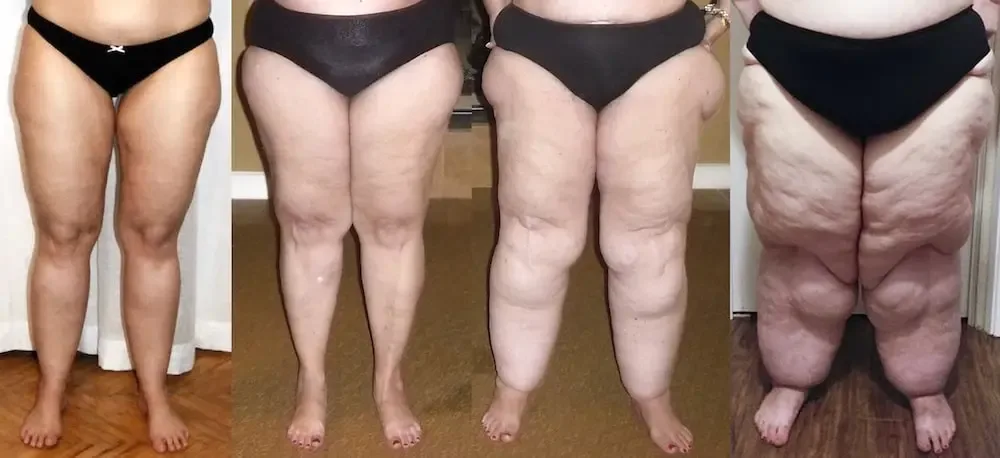
Stage 1: Early Lipedema
In the early stages of Lipedema, the skin remains smooth4, but patients begin to notice a disproportionate fat accumulation in the hips, thighs, and buttocks. This stage is often mistaken for simple weight gain.
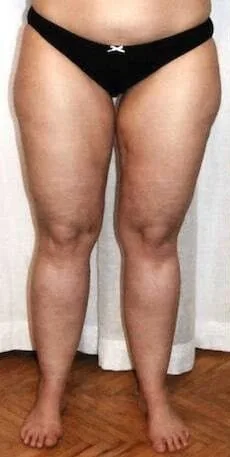
Despite the smooth appearance of the skin, there may be a slight thickening of the subcutaneous tissue, and small fat nodules can be felt under the skin. These may feel “rice-like” or “pearl-sized”.5
Women in Stage 1 may experience tenderness or discomfort in the affected areas, but there is no visible edema (swelling) or cellulite-like indentations.
This early stage is sometimes referred to as the "cosmetic" stage because the external signs are subtle, though the underlying condition is already present.
Stage 2: Developing Nodules and Dimpling
As Lipedema progresses to Stage 2, the skin begins to take on a dimpled, "orange-peel" texture due to the development of larger fat nodules that become palpable under the skin's surface. They can be “walnut-size” to “apple like”6. There may be a hardening of the subcutaneous tissue due to increasing fibrotic changes.
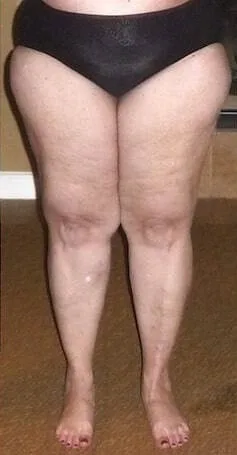
This dimpling is often mistaken for cellulite, but it is caused by fibrosis of the fatty tissue and an increase in inflammation. This can also be called “mattressing”.7
Pain and sensitivity in the affected areas become more noticeable, and bruising occurs more easily.8
Although visible swelling is still absent, many women report that their legs feel heavier and more fatigued, particularly after standing for long periods.
Stage 3: Large Fat Lumps and Skin Folds
By Stage 3, the condition becomes more pronounced.9
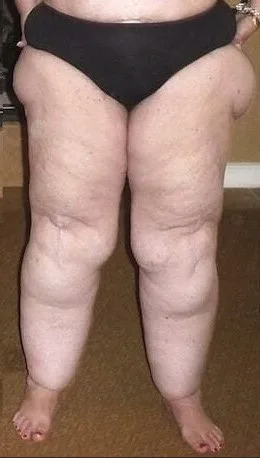
Large, irregular fat deposits form, particularly around the knees and inner thighs, causing significant distortion in the legs' shape. Skin folds and hanging lobes of fat begin to appear, and mobility can be increasingly affected.10 The altered mobility can also lead to more advanced joint issues and arthritis.
The hardened, fibrotic tissue can cause discomfort and restrict movement, making walking and other activities difficult. As the fat compresses the lymphatic system, some women may experience swelling due to lymphatic fluid buildup, although it is not as severe as in Stage 4.11 The feet and hands are still spared in Stage 3.
Stage 4: Lipedema with Lymphedema (Lipo-Lymphedema)
In the final stage, Lipedema progresses to Lipo-Lymphedema, where the lymphatic system is severely compromised. The skin becomes hardened, and the fat tissue forms large lobes, which obstruct lymphatic flow, leading to visible, persistent swelling (edema).
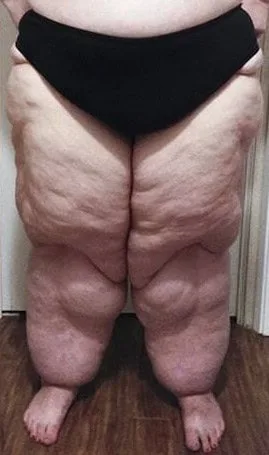
At this stage, the legs often take on a column-like appearance, with swelling extending down to the feet, which were previously spared in earlier stages. The tops of the feet in Stage 4 are now swollen with a positive Kaposi Stemmer sign being present.
The skin may become discolored, and infections can occur due to poor lymphatic drainage. Stage 4 is often disabling, with significant pain, reduced mobility, and a high risk of complications such as skin infections and ulcers.12
Progression and Early Intervention
It is important to note that Lipedema can progress at different rates for each individual, and not everyone will reach the advanced stages if the condition is diagnosed early and treated appropriately.
According to Dr. Karen Herbst, one of the leading researchers in Lipedema, early detection and even conservative treatments like compression therapy and manual lymphatic drainage can help slow the progression of the disease.
Sources:
- WOLD, L. E., HINES, E. A., Jr, & ALLEN, E. V. (1951). Lipedema of the legs; a syndrome characterized by fat legs and edema. Annals of internal medicine, 34(5), 1243–1250. https://doi.org/10.7326/0003-4819-34-5-1243 ↩︎
- Al-Ghadban, S., Cromer, W., Allen, M., Ussery, C., Badowski, M., Harris, D., & Herbst, K. (2019). Dilated Blood and Lymphatic Microvessels, Angiogenesis, Increased Macrophages, and Adipocyte Hypertrophy in Lipedema Thigh Skin and Fat Tissue. Journal of Obesity, 2019. https://doi.org/10.1155/2019/8747461. ↩︎
- Michelini, S., Chiurazzi, P., Marino, V., Dell’Orco, D., Manara, E., Baglivo, M., Fiorentino, A., Maltese, P., Pinelli, M., Herbst, K., Dautaj, A., & Bertelli, M. (2020). Aldo-Keto Reductase 1C1 (AKR1C1) as the First Mutated Gene in a Family with Nonsyndromic Primary Lipedema. International Journal of Molecular Sciences, 21. https://doi.org/10.3390/ijms21176264. ↩︎
- Herbst, K., Mirkovskaya, L., Bharhagava, A., Chava, Y., & Te, C. (2015). Lipedema Fat and Signs and Symptoms of Illness, Increase with Advancing Stage. Archives of Medicine, 7. ↩︎
- Rasmussen, J. C., Aldrich, M. B., Fife, C. E., Herbst, K. L., & Sevick-Muraca, E. M. (2022). Lymphatic function and anatomy in early stages of lipedema. Obesity (Silver Spring, Md.), 30(7), 1391–1400. https://doi.org/10.1002/oby.23458 ↩︎
- Herbst, K., Mirkovskaya, L., Bharhagava, A., Chava, Y., & Te, C. (2015). Lipedema Fat and Signs and Symptoms of Illness, Increase with Advancing Stage. Archives of Medicine, 7. ↩︎
- Rasmussen, J. C., Aldrich, M. B., Fife, C. E., Herbst, K. L., & Sevick-Muraca, E. M. (2022). Lymphatic function and anatomy in early stages of lipedema. Obesity (Silver Spring, Md.), 30(7), 1391–1400. https://doi.org/10.1002/oby.23458 ↩︎
- viii Chakraborty, A., Crescenzi, R., Usman, T., Reyna, A., Garza, M., Al-Ghadban, S., Herbst, K., Donahue, P., & Rutkowski, J. (2022). Indications of Peripheral Pain, Dermal Hypersensitivity, and Neurogenic Inflammation in Patients with Lipedema. International Journal of Molecular Sciences, 23. https://doi.org/10.3390/ijms231810313. ↩︎
- Herbst, K., Mirkovskaya, L., Bharhagava, A., Chava, Y., & Te, C. (2015). Lipedema Fat and Signs and Symptoms of Illness, Increase with Advancing Stage. Archives of Medicine, 7. ↩︎
- Cobos, L., Herbst, K., & Ussery, C. (2019). MON-116 Liposuction for Lipedema (Persistent Fat) in the US Improves Quality of Life. Journal of the Endocrine Society, 3. https://doi.org/10.1210/JS.2019-MON-116. ↩︎
- Gould, D., El‐Sabawi, B., Goel, P., Badash, I., Colletti, P., & Patel, K. (2019). Uncovering Lymphatic Transport Abnormalities in Patients with Primary Lipedema. Journal of Reconstructive Microsurgery, 36, 136 - 141. https://doi.org/10.1055/s-0039-1697904. ↩︎
- Ernst, A., Bauer, H., Bauer, H., Steiner, M., Malfertheiner, A., & Lipp, A. (2022). Lipedema Research—Quo Vadis?. Journal of Personalized Medicine, 13. https://doi.org/10.3390/jpm13010098. ↩︎