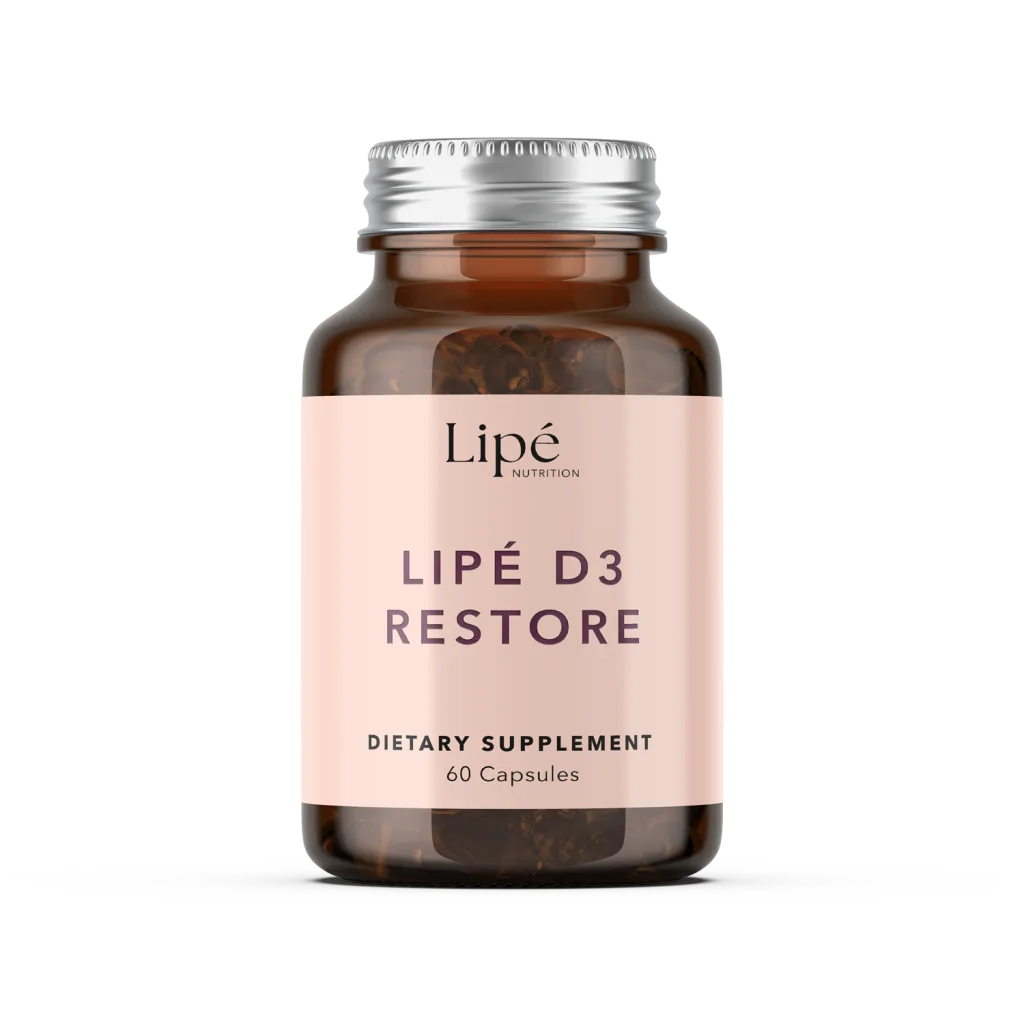
More than 90% of women with lipedema are vitamin D deficient. That statistic alone might seem like a straightforward case for supplementing with vitamin D3. But the lipedema picture is more complicated than that, and it explains why D3 Restore was formulated the way it was rather than simply being a standard vitamin D capsule.
The sequestration problem
Vitamin D is fat-soluble. That means it is stored in fat tissue rather than circulating freely in the bloodstream the way water-soluble vitamins do. In a body with a normal amount of fat, that storage is a useful buffer. In a body with lipedema fat, it can become a trap.
Lipedema fat tissue may sequester vitamin D, pulling it out of circulation and holding it in the fat cells where it is not accessible to the immune system, the thyroid, or any of the other tissues that need it. This is one reason why over 90% of women with lipedema have vitamin D deficiency. The vitamin D they do have may be locked away in fat tissue where it cannot be used.
This means that the dose required to maintain adequate functional levels is typically higher in women with lipedema than in the general population. Simply matching the standard recommended daily allowance may not be sufficient.
What vitamin D actually does
Vitamin D operates more like a hormone than a typical vitamin. It has receptors throughout the body including in immune cells, thyroid tissue, muscle cells, and the brain. Adequate vitamin D supports immune regulation, may help reduce inflammatory cytokines, supports thyroid hormone production, and plays a role in insulin sensitivity. Every one of those functions is directly relevant to lipedema management.
Why the co-factor combination matters
D3 Restore goes beyond a standard vitamin D3 supplement by combining D3 with three co-factors: vitamin K2, magnesium, and zinc.
Vitamin K2 helps direct where calcium goes once vitamin D has helped the body absorb it. Without adequate K2, calcium can deposit in soft tissues and arterial walls rather than being directed to bone. Magnesium is required for the enzyme reactions that convert vitamin D into its active form. Without sufficient magnesium, supplemental D3 cannot be fully converted regardless of the dose. Zinc supports immune function and works synergistically with vitamin D in several immune pathways.
Who the "D3 Restore" Supplement is for
Given the near-universal prevalence of vitamin D deficiency in lipedema women, we designed “D3 Restore”for this reason. Almost every woman with lipedema would benefit. Caution: If you are a woman with a history of kidney stones, you will need to be careful and definitely talk with your healthcare provider.