
It is common for women with lipedema to notice cyclic symptoms variation with their menstrual cycle. You are not alone. Often starting a few days before their cycle starts and for as long as 7-10 days, an increase in inflammation, fluid retention, bloating and pain may be felt.
“Since I reached puberty, I can recall my asthma and allergies worsening during my cycle. Being rather irritated to not only deal with menstrual cramps but an upper respiratory infection at the same time with a lingering asthmatic cough for a couple weeks. It wasn’t every month, but there definitely was a pattern and it was forever dismissed by my pediatrician and PCP as coincidence. Now I notice that I feel more inflamed and the lipedema nodules in my legs are more tender during this time.”
Furthermore, if chronic inflammatory conditions are also present like asthma, mast cell activation syndrome or autoimmune conditions, these conditions may temporarily and cyclically worsen. It is not uncommon to feel like you are more susceptible to illnesses during this time frame as well. Why is that?
It was once believed that menstruation was just a hormonal process driven by changes in the hormones secreted from the ovary. Although discovered decades ago by Finn and researchers in the 1980’s, menstruation is also a complex inflammatory process[1]. The interactions between our reproductive hormones, immune system and lipedema are complex and has yet to be fully appreciated. Let’s review what we do know and how it could be impacting your health and lipedema symptoms.
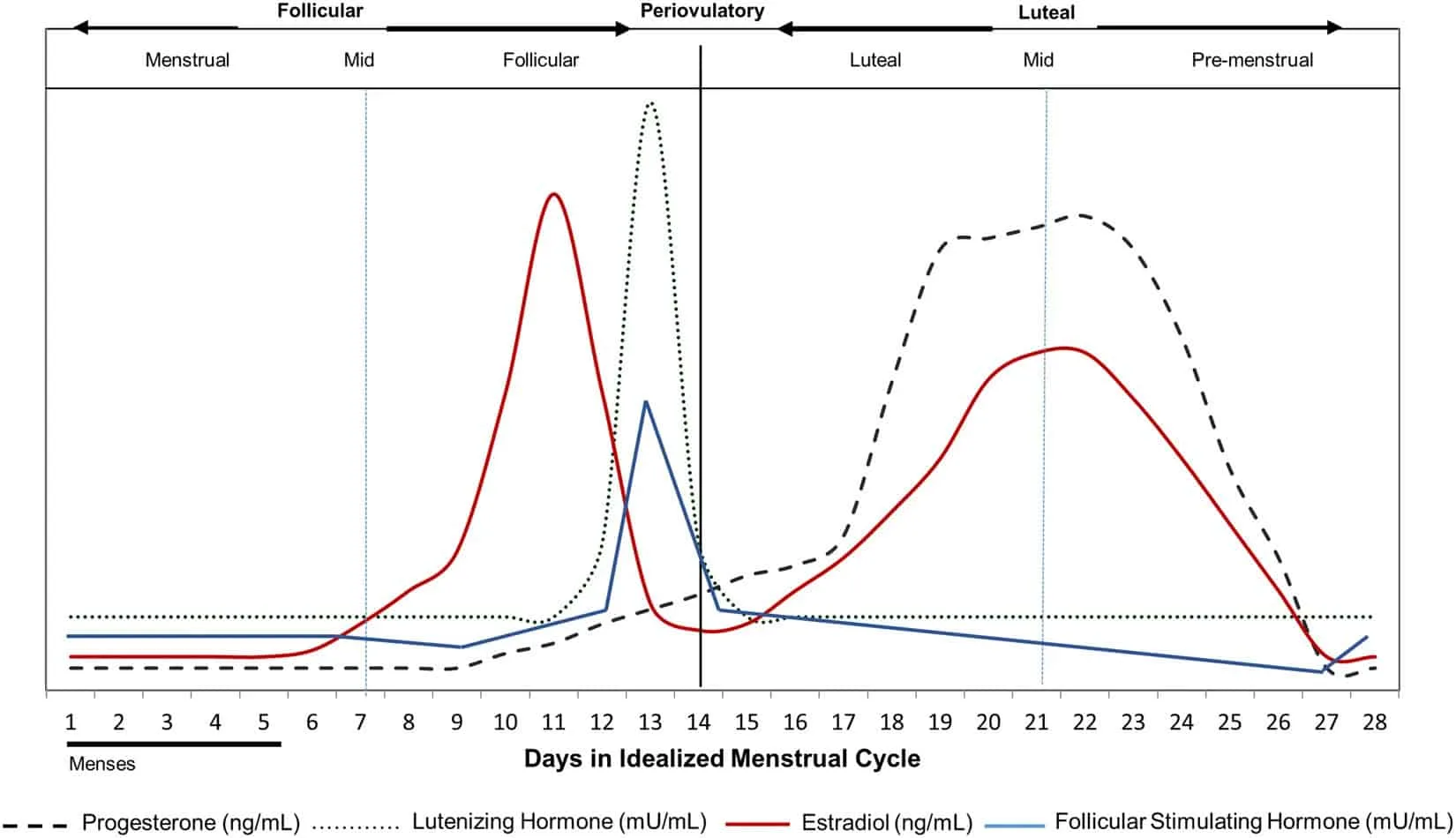
We all know that our reproductive hormone levels fluctuate throughout the month. Graphs of these hormone levels demonstrate how they change; it is no wonder women feel physically and emotionally differently throughout the month!
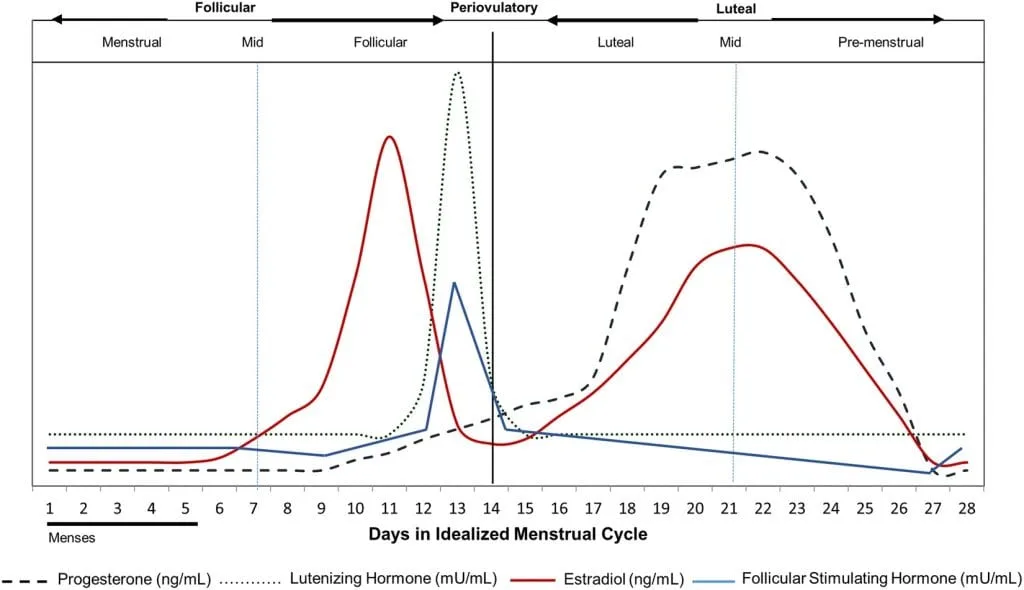
Approximately 2 days before menstrual bleeding starts, progesterone and estrogen levels plummet to their lowest level and remain low. Estrogen levels then start to increase after about a week, but it is approximately 2 weeks before progesterone levels start to rise.
Research has shown that estrogen levels correlate with increased insulin resistance and inflammation.
Specifically, very early in the menstrual cycle when estradiol levels are low, there is a correlation with higher inflammatory markers like hs-CRP (high sensitivity C-reactive protein)[2]. Multiple inflammatory cytokines (messaging molecules) undergo cyclic changes during the menstrual cycle including CRP, interleukin-4 (IL-4), insulin-like growth factor – 1 (IGF-1) and tumor necrosis factor – alpha (TNF-a)[3].
IL-4 is an anti-inflammatory type of cytokine, positively correlating with estrogen levels[4]. It is secreted by different white blood cells as well as mast cells, and functions as a potent immune regulator, activating macrophages and assisting in tissue repair[5].
TNF-alpha positively correlates with progesterone levels[6] and is a pro-inflammatory type of cytokine that is known to be involved in the causes of some inflammatory and autoimmune diseases. It is made by activated macrophages and other white blood cells and functions to trigger other inflammatory messaging chemicals[7].
Hormones as well as many other compounds and metabolite levels vary throughout a woman’s cycle and the impact of this variation has yet to be fully appreciated. Researchers from Dublin, Ireland measured over 400 metabolites at different times of a woman’s cycle (divided into 5 stages: menstrual, follicular, periovulatory, luteal and premenstrual) hormones, lipids, vitamin D, amino acids, B vitamin levels, neurotransmitters and more. For example, amino acid precursors and B vitamins involved in neurotransmitter formation and function fluctuate throughout the cycle and may predispose some women to cyclic stress, food cravings and emotional lability[8].
Cyclic lipedema symptoms may include: bloating, fluid retention, emotional lability, increase in pain, disturbed sleep, fatigue, flare-up of other chronic conditions.
The exact mechanism leading to these symptoms is complex and the following are contributors:
- • Fluctuation in estrogen levels
- • Fluctuation in progesterone levels
- • Fluctuation in B vitamin levels
- • Fluctuation in neurotransmitters
- • Fluctuation in amin acid precursors (used in LOTS of functions)
- • Fluctuations in inflammatory messaging chemicals (cytokines)
- • Fluctuations in inflammatory cells numbers and functions (macrophages, mast cells, etc)
A complex process designed to help the woman’s body naturally and safely complete shedding of the endometrial lining without bleeding to death or becoming infected. Women with lipedema, have chronic systemic inflammation from the inflammatory processes occurring within the lipedema tissue. As a result, many women with lipedema experience worsening of their lipedema and chronic condition symptoms as well as experience notable PMS/PMDS symptoms.
With hope and healing,
Dr. Jonie Girouard, M.D.
Lipedema Specialist | Founder, LipoedemaClinic.org

Dr. Jonie Girouard, M.D. is a global expert in Lipedema. She is the founder of the Lipedema Clinic, on a mission to educate and empower the millions of women still undiagnosed.
[1] https://journals.sagepub.com/doi/full/10.2217/whe.13.32
[2] https://academic.oup.com/jcem/article-abstract/90/6/3230/2870550?redirectedFrom=fulltext
[3] https://bmcmedicine.biomedcentral.com/articles/10.1186/s12916-023-03195-w
[4] https://pubmed.ncbi.nlm.nih.gov/17713355/
[5] https://pmc.ncbi.nlm.nih.gov/articles/PMC3481177/
[6] https://pubmed.ncbi.nlm.nih.gov/17713355/